

Fall Maintenance Season: Why Now’s the Time to Inspect and Repair

Don’t wait for winter damage. Fall is your best window to catch defects, restore concrete, and protect your structure.
Why Fall Is the Critical Window for Maintenance
As seasons shift, precast structures endure heightened risk. Moisture infiltration, freeze-thaw cycles, and thermal stress act more aggressively. Fall gives you the ideal opportunity to intervene before damage escalates.
Better curing conditions: Sealants, patching mortars, and overlays bond and cure more reliably in moderate fall temperatures than in freezing winter or scorching summer.
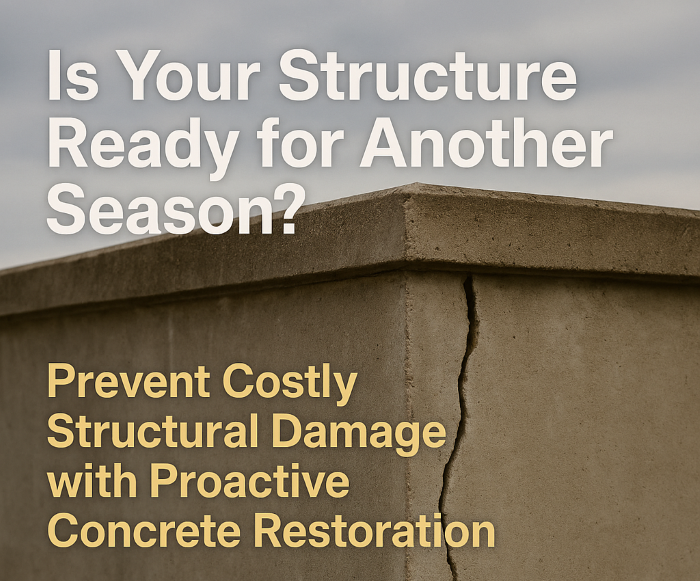
Prevent escalation: Water entering cracks will freeze, expand, and widen the damage. What’s minor today can turn into delamination or spalling tomorrow.
Joint & sealant integrity: Cracked or aged sealants let in moisture. Replacing them now preserves protective barriers through winter.
Avoid emergency costs & downtime: Deferred maintenance often demands heavy repair, scaffolding, and disruption—costs that rise in cold weather.
Extend structural life: Proactive repair preserves the original capacity and delays major rehabilitation.
What to Inspect This Fall
Component | What to Look For | Significance / Risk |
Surface Cracks & Microcracks | Hairline or widening cracks, mapped locations | Pathways for water intrusion |
Joint Sealants & Expansion Joints | Drying, cracks, missing or failed sealant | Open joints allow moisture ingress |
Delamination / Spalling | Flakes, surface disbonding, edge deterioration | Signals deeper structural issues or moisture damage |
Embedded Anchors & Connections | Corrosion, looseness, misalignment | Potential failure of panel anchorage |
Drainage & Runoff | Ponding, clogged drains, incorrect slopes | Water must be shed away, not absorbed |
Past Repair Zones | Signs of re-damage, cracking around patches | Verify if past work held up |
Take thorough photos, annotate locations, and assign severity levels for each defect. This becomes your baseline for planning repairs.
Repair Strategies & Interventions
Crack Injection (epoxy / polyurethane): Fills structural and nonstructural cracks and restores seal integrity.
Joint Resealing / Renewal: Restore watertightness in expansion joints and interfaces.
Spall / Delamination Patching: Use polymer-modified, freeze-thaw rated mortars compatible with existing precast.
Anchor / Connector Repair: Replace or reinforce corroded or compromised embedded anchors.
Surface Sealing / Coating: Apply penetrating sealers or protective coatings to reduce moisture ingress.
Drainage Corrections: Regrade, clean drains, or add scuppers so water flows away from panels.
Cost Perspective: Why Earlier Beats Later
Many property owners underestimate the impact of deferred maintenance. A small crack or seal failure today can evolve into a condition requiring panel replacement, extensive repairs, or structural remediation.
By addressing defects while they’re minor, you avoid costs of mobilization, scaffolding, panel removal, system downtime, and safety risks. Your investment now yields outsized protection and ROI over time.
Schedule a Free Site Walk
We provide a complimentary visual inspection & structural condition assessment for precast structures, which includes:
Detailed survey of cracks, spalls, joints, anchors
Photographic documentation and severity ratings
Prioritized repair recommendations with cost estimates


Comments